
Android 15's Privacy Features, and What Android 16 Adds Next
Android 15 is not new. Google released the first developer preview in February 2024, and the finished version reached Pixel phones in October 2024. What is new this month is a look at what comes next. On May 13, 2025, Google set out the security features and the redesign coming with Android 16, which is due in the second quarter. Here is what Android 15 actually changed for privacy, and what Android 16 adds.
From preview to phones
Google published the first Android 15 developer preview on February 16, 2024. Its privacy items were aimed at developers, including Privacy Sandbox updates, new Health Connect data types and partial screen sharing, so "users can share or record just an app window rather than the entire device screen."
Google released the source code on September 3, 2024 and began the Pixel rollout on October 15. Other phone makers follow their own timetables. Samsung started its One UI 7 rollout on April 7, 2025, after what 9to5Google called "a delay of nearly 6 months compared to when Google first released Android 15."
What Android 15 changed for privacy
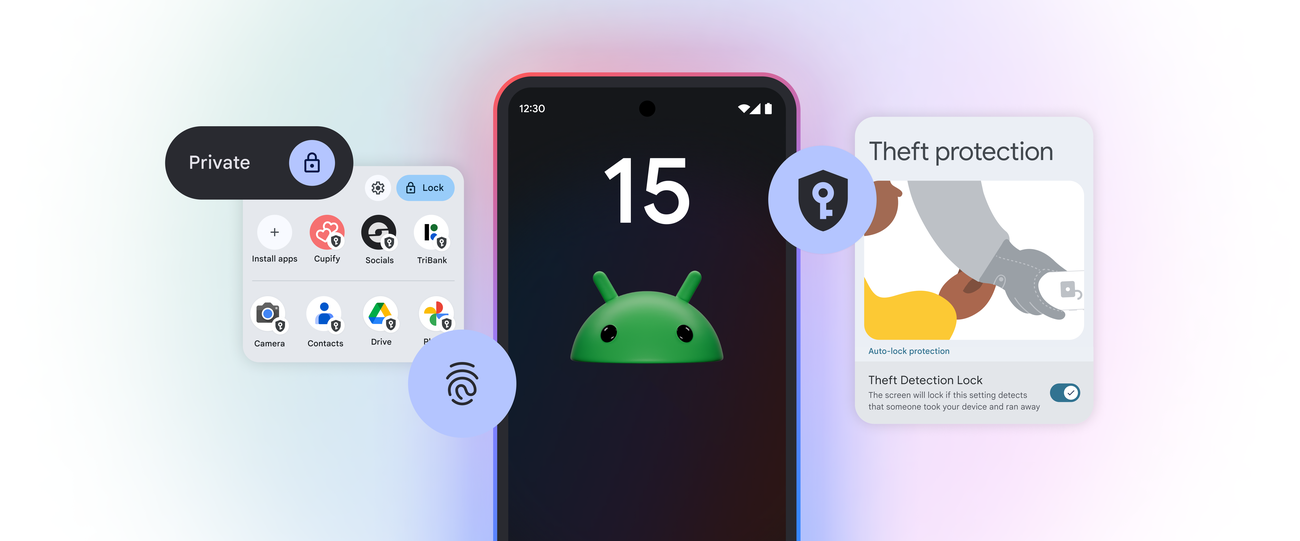
The headline feature is private space. "Private space in Android 15 acts like a digital safe on your phone," Google wrote at launch. It is a separate area for sensitive apps, behind an additional layer of authentication.
"When private space is locked, apps remain virtually invisible to others and are hidden from your apps list, recent apps view, notifications and settings." Users can also hide the fact that the space exists.
Android 15 also targets fraud. Apart from a few exceptions, such as wearable companion apps, one-time passwords are now hidden from notifications, which Google called "a common attack vector for fraud and spyware." During screen sharing, private notification content is hidden, and so is the screen while users enter passwords or card numbers.
Some protections announced alongside Android 15 do not need it. Theft Detection Lock "uses AI to help keep your data safe" by locking a phone that senses it has been snatched. Remote Lock lets owners lock a phone from any device with their phone number and a security check. Google says both are "now available for most Android 10+ devices." Android 15 itself adds extra checks before a thief can remove the SIM or turn off Find My Device.
What Android 16 adds
Android 16 arrives earlier than usual. In October 2024, Google moved its major release to the second quarter "to better align with the schedule of device launches across our ecosystem." The final scheduled beta arrived on April 17, 2025, with "the developer APIs and all app-facing behaviors" final.
On May 13, Google set out the security side:
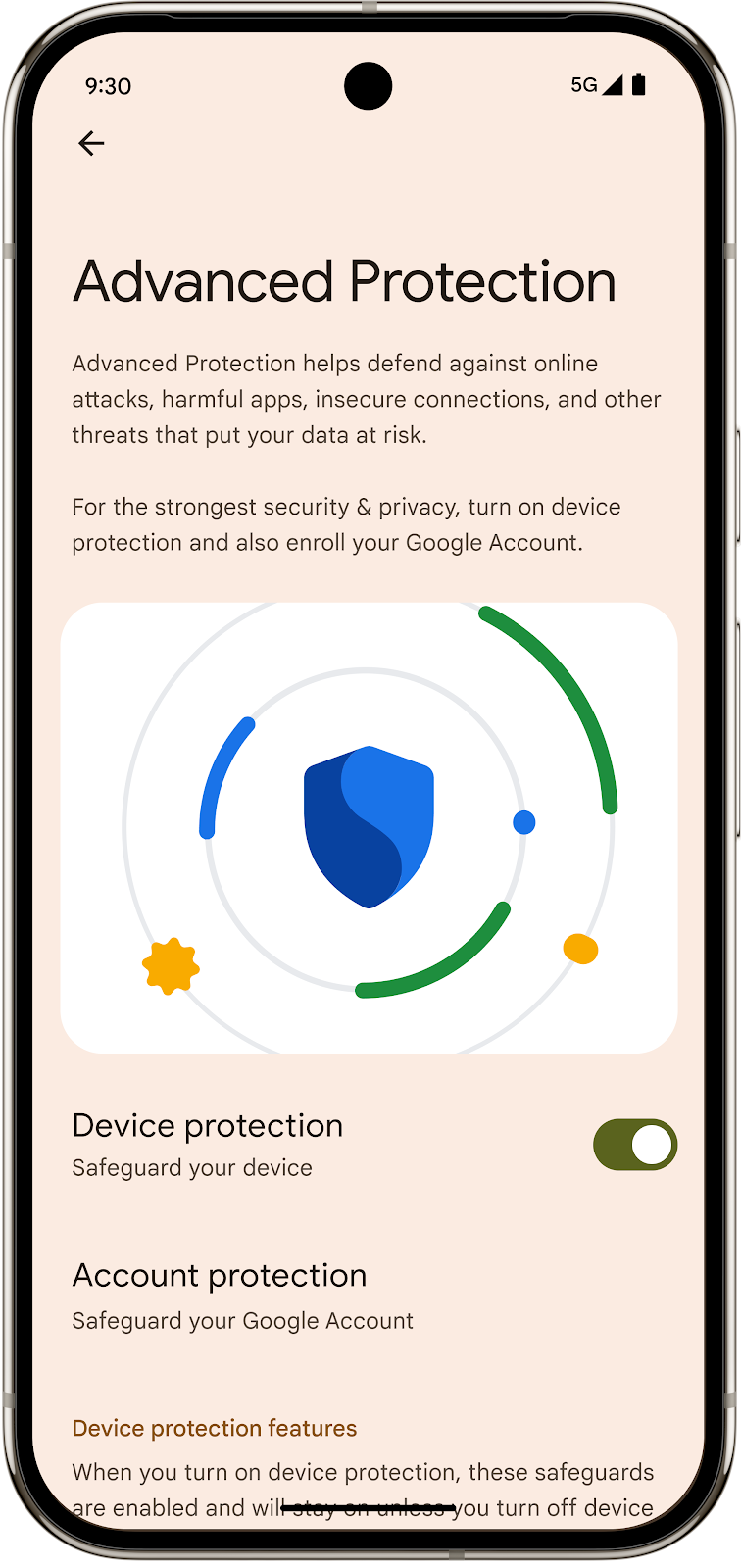
- Advanced Protection: one device-level setting that turns on "Google's strongest security for mobile devices," aimed at at-risk people such as journalists, and at anyone who prioritizes security. It requires Android 16.
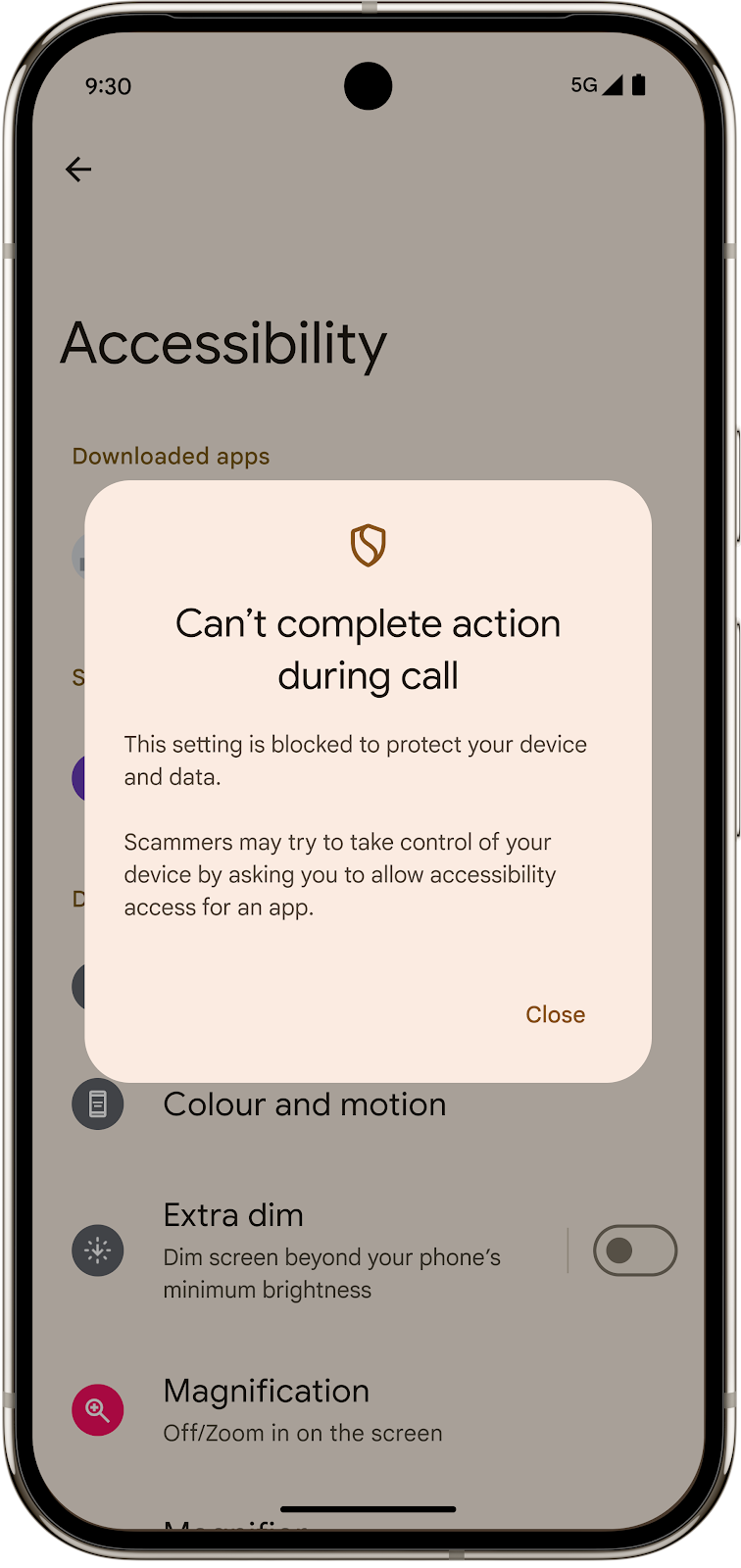
- In-call protections: during calls with people who are not in your contacts, Android blocks turning off Google Play Protect, sideloading an app for the first time, and granting accessibility permissions. The last two need Android 16.
- Lock screen codes: when the phone is not on Wi-Fi and has not been unlocked recently, Android 16 hides one-time passwords on the lock screen.
The same day, Google announced Material 3 Expressive, "one of our biggest updates in years." Google said it "builds on Material You," with springier animations, updated dynamic color themes and customizable Quick Settings. Pixel owners can try it first "later this year," and a Pixel beta with some of the changes followed on May 20.
What changes for developers


Android 15 gave developers single-tap passkey sign-in, a way to detect when an app is being screen recorded, and stricter rules against task hijacking. Android 16's biggest change is timing. "The Q2 major release will be the only release in 2025 to include behavior changes that can affect apps," Google said. Android 16 also adds "stronger security against Intent redirection attacks," and Google has asked developers to start testing local network protections planned for a future release.
What users and developers can take from it
- The version number is only part of the story. Theft Detection Lock and Remote Lock work on most Android 10+ phones. Private space needs Android 15 from the phone maker, and some makers shipped it months after Pixel.
- Privacy is moving from settings to defaults. Hidden codes, blocked actions during calls and a single Advanced Protection switch make the safe choice automatic at the risky moment, instead of relying on users to find a setting.
- Developers have less slack. With behavior changes arriving a quarter earlier, apps that handle logins or payments are best tested against the Android 16 beta now.
Update: what happened next (October 2026)
This article was first published on May 28, 2025. Here is how the story has developed since then:
- June 2025: Google released Android 16 on June 10 to most supported Pixel devices, without Material 3 Expressive. Google said the Q3 update would provide "much of the new visual polish associated with Material Expressive."
- August 2025: Google announced that from 2026, "Android will require all apps to be registered by verified developers" before users can install them on certified devices, starting in a few countries. It cited "over 50 times more malware from internet-sideloaded sources than on apps available through Google Play."
- September 2025: Android 16 QPR1 brought Material 3 Expressive to Pixel 6 and newer phones on September 3.
- December 2025: Android 16 QPR2, released December 2, delayed SMS messages containing a retriever hash for most apps by three hours, "to help prevent OTP hijacking."
- June 2026: Android 17 arrived on June 16. Its privacy changes include a location button that grants precise location for the current session only, a contact picker that avoids the broad contacts permission, and a new permission for apps that talk to devices on the local network. Two days later, Google set September 30, 2026 as the start of developer verification in Brazil, Indonesia, Singapore and Thailand, with a global rollout planned from 2027. Unregistered apps can still be installed through adb or a new "advanced flow."
Private space protected apps from people holding the phone. The releases since have focused on the people on the other end of a call or a download link.
Sources
- Android Developers Blog: The first developer preview of Android 15 (February 16, 2024)
- Google Security Blog: I/O 2024, what's new in Android security and privacy (May 15, 2024)
- Android Developers Blog: Android 15 is released to AOSP (September 3, 2024)
- Google: What's new in Android 15, plus more updates (October 15, 2024)
- Android Developers: Android 15 features and APIs
- Android Developers Blog: More frequent Android SDK releases (October 31, 2024)
- 9to5Google: Samsung starts the One UI 7 rollout (April 7, 2025)
- Android Developers Blog: The fourth beta of Android 16 (April 17, 2025)
- Google: What's new in Android security and privacy in 2025 (May 13, 2025)
- Google: Android and Wear OS are getting a big refresh (May 13, 2025)
- 9to5Google: Android 16 QPR1 Beta 1 brings Material 3 Expressive to Pixel (May 20, 2025)
- Android Developers Blog: Android 16 is here (June 10, 2025)
- Android Developers Blog: A new layer of security for certified Android devices (August 25, 2025)
- 9to5Google: Android 16 QPR1 rolls out to Pixel with Material 3 Expressive (September 3, 2025)
- Android Developers Blog: Android 16 QPR2 is released (December 2, 2025)
- Android Developers Blog: Android 17 is here (June 16, 2026)
- Android Developers Blog: Android developer verification, building a safer ecosystem together (June 18, 2026)
Frequently asked questions
Subscribe to Weekly Insights
Get weekly insights on AI, SEO, and Growth Marketing delivered to your inbox. No spam, just the good stuff.
Prefer not to subscribe? Feel free to follow me on LinkedIn for the same insights and to connect