From H200 to Blackwell Ultra: Nvidia's Next-Gen AI Chips
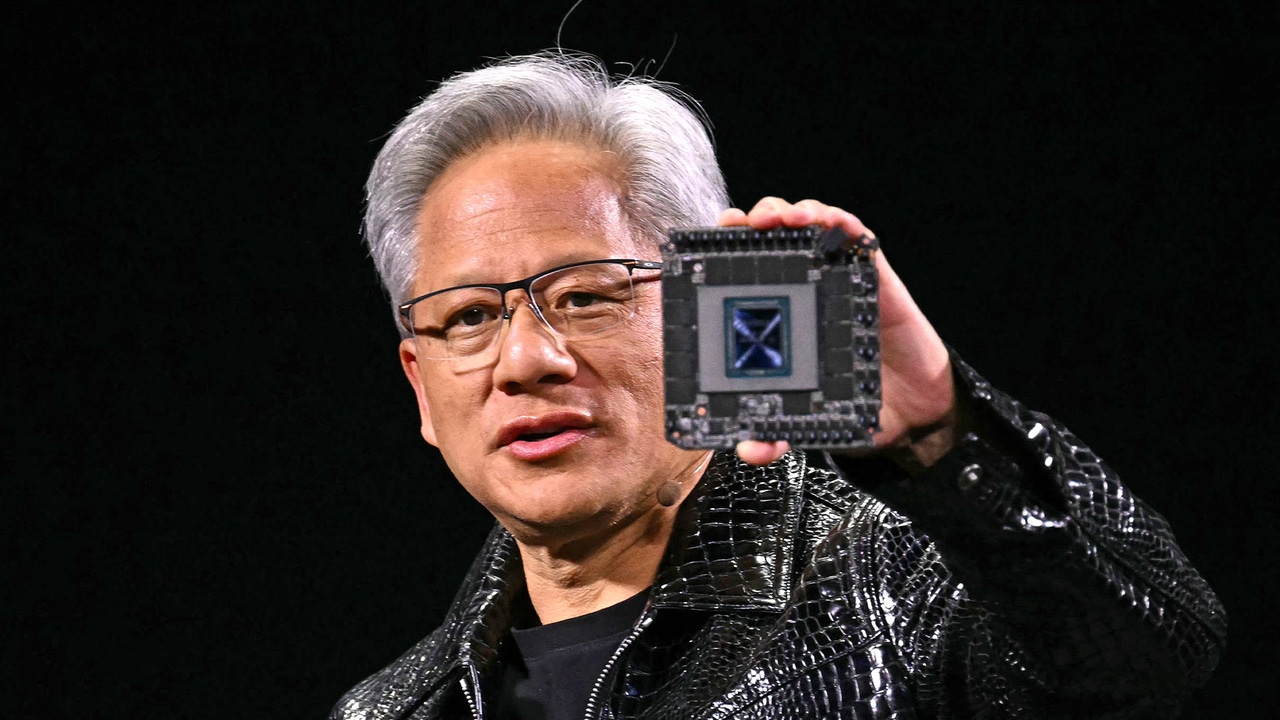
The H200 is not Nvidia's newest AI chip. Nvidia announced it in November 2023, and it has been on the market since mid-2024. As of late May 2025, Nvidia's next chip is Blackwell Ultra, unveiled at its GTC conference in March and due from partners in the second half of 2025. Here is what each chip is, and what Nvidia's claims for it are measured against.
The H200: a memory upgrade from 2023
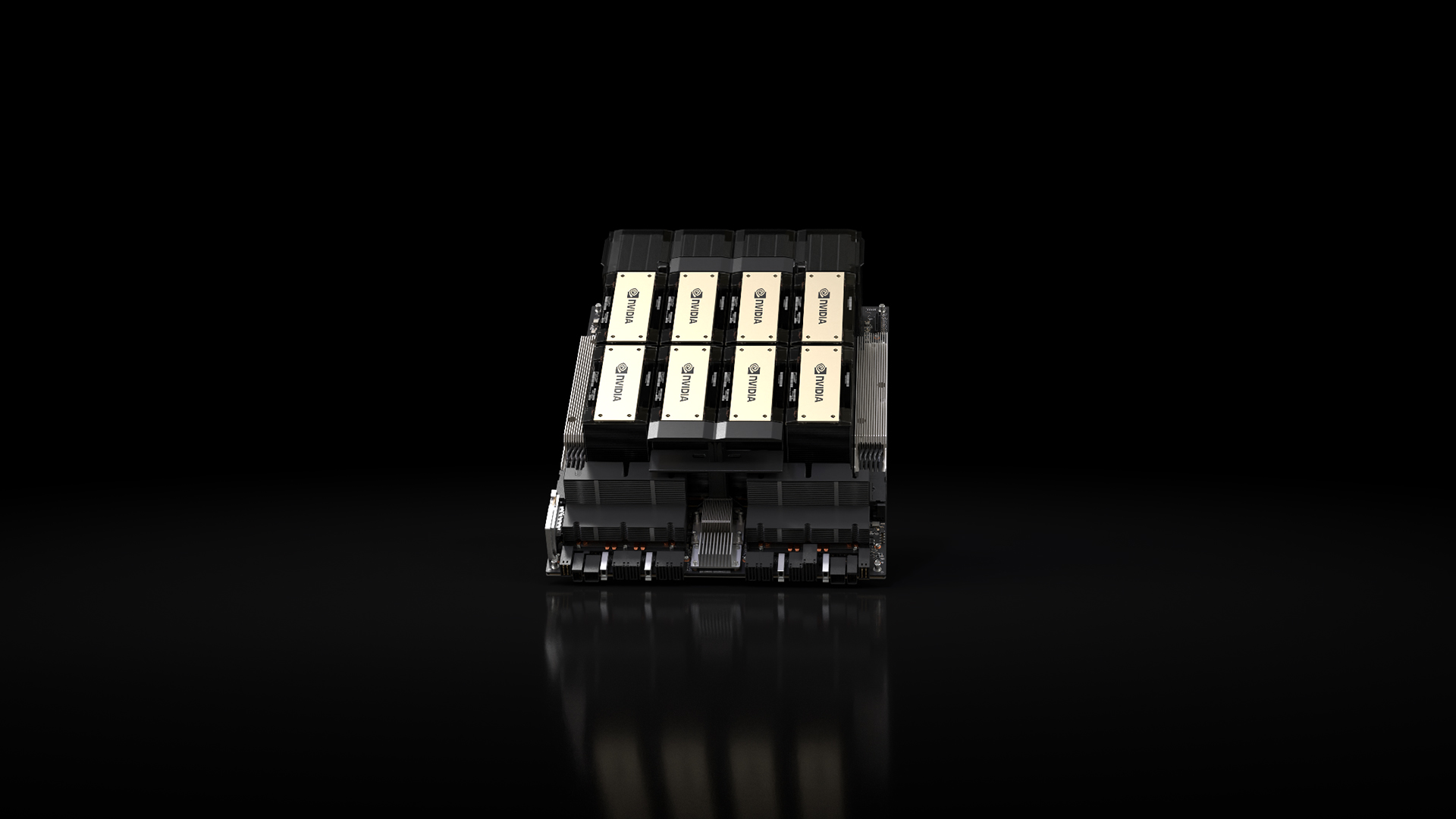
Nvidia introduced the H200 on November 13, 2023, at the SC23 supercomputing conference. It is built on Hopper, the same architecture as the H100. The change is memory: Nvidia called it the first GPU with HBM3e, carrying 141GB at 4.8 terabytes per second. That is nearly double the H100's capacity, with 1.4 times its memory bandwidth.
The "double" claim comes from one test. Nvidia said the H200 nearly doubles inference speed on Llama 2, a 70-billion-parameter language model, compared with the H100, and its product page puts the figure at 1.9 times. On energy, Nvidia claimed better efficiency, not a lower power draw: it said the gains come "within the same power profile as the H100".
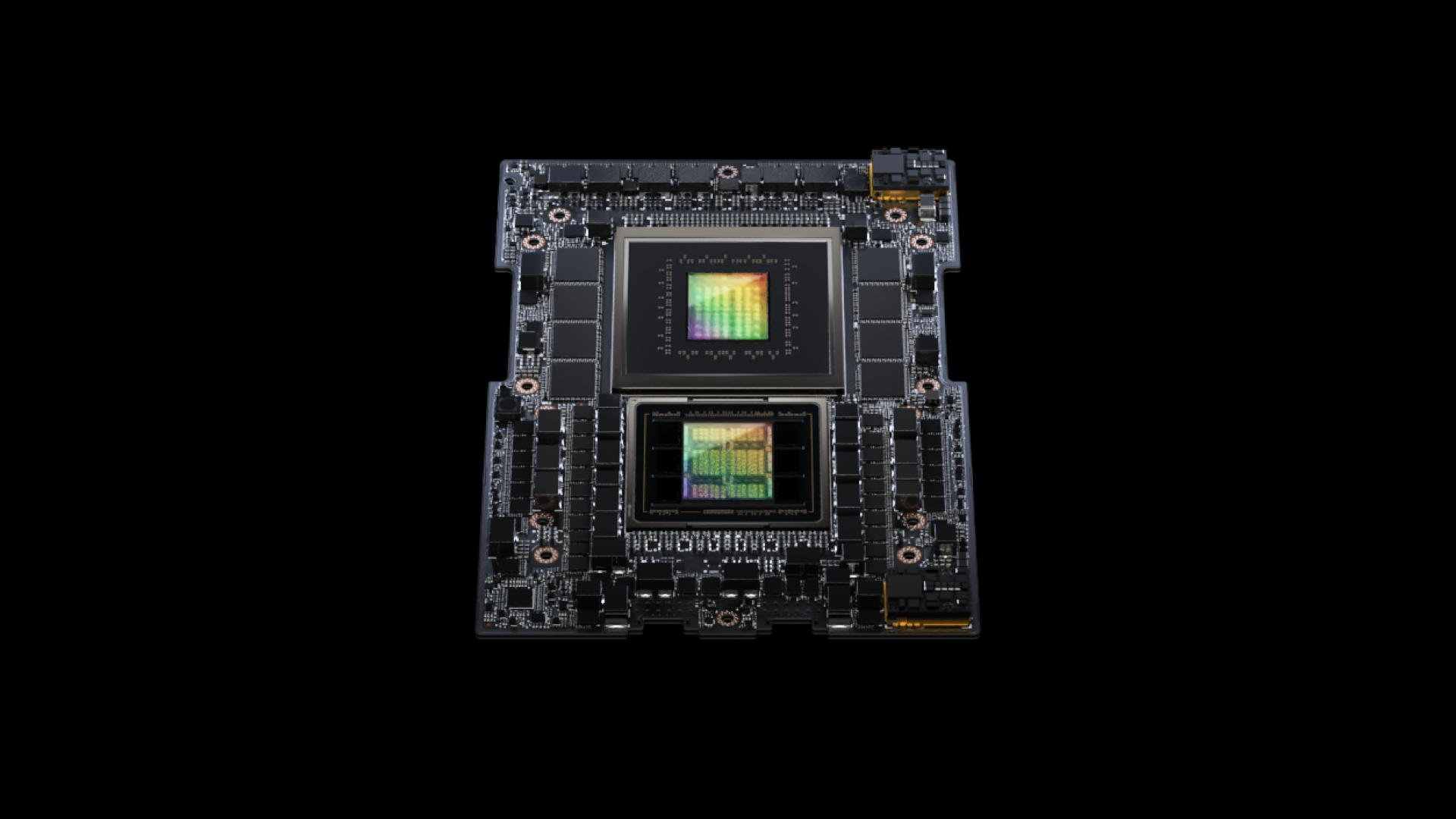
HGX H200 server boards hold four or eight GPUs and are compatible with HGX H100 systems, so server makers could update existing machines.
The same GPU also sits in the GH200 Grace Hopper Superchip with HBM3e, announced in August 2023, which pairs it with Nvidia's Grace CPU on a single module. By August 2024, CoreWeave had become the first cloud provider to announce general availability.
Blackwell: the generation that followed
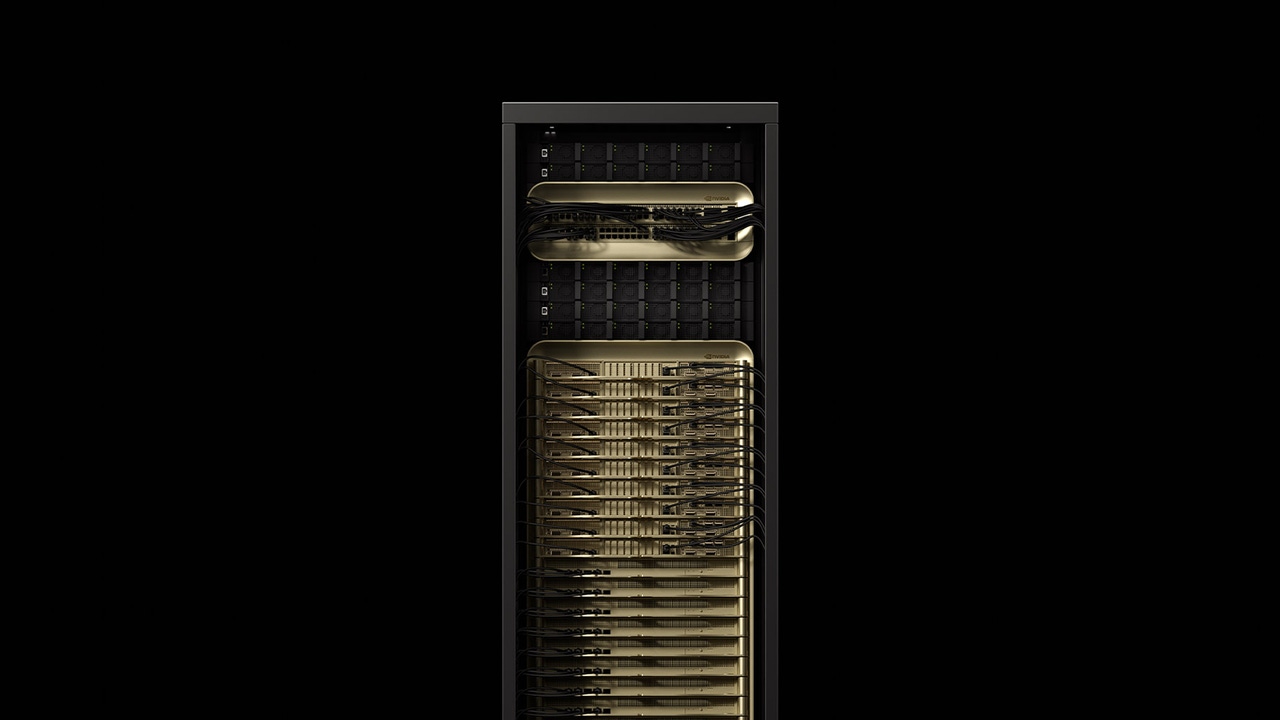
Hopper's real successor is Blackwell, announced at GTC on March 18, 2024. Its flagship system, the liquid-cooled GB200 NVL72, links 72 Blackwell GPUs and 36 Grace CPUs in one rack. Nvidia said it offers up to 30 times the performance of the same number of H100 GPUs on LLM inference, and cuts cost and energy use by up to 25 times. Those are best-case figures for one type of workload, and the energy claim belongs to Blackwell, not to the H200.
When Nvidia reported first-quarter results on May 28, 2025, CEO Jensen Huang said the Blackwell NVL72 system "is now in full-scale production across system makers and cloud service providers." The report also showed a $4.5 billion charge after the U.S. government required a license for exports of Nvidia's H20 chips to China.
What Nvidia unveiled in 2025: Blackwell Ultra
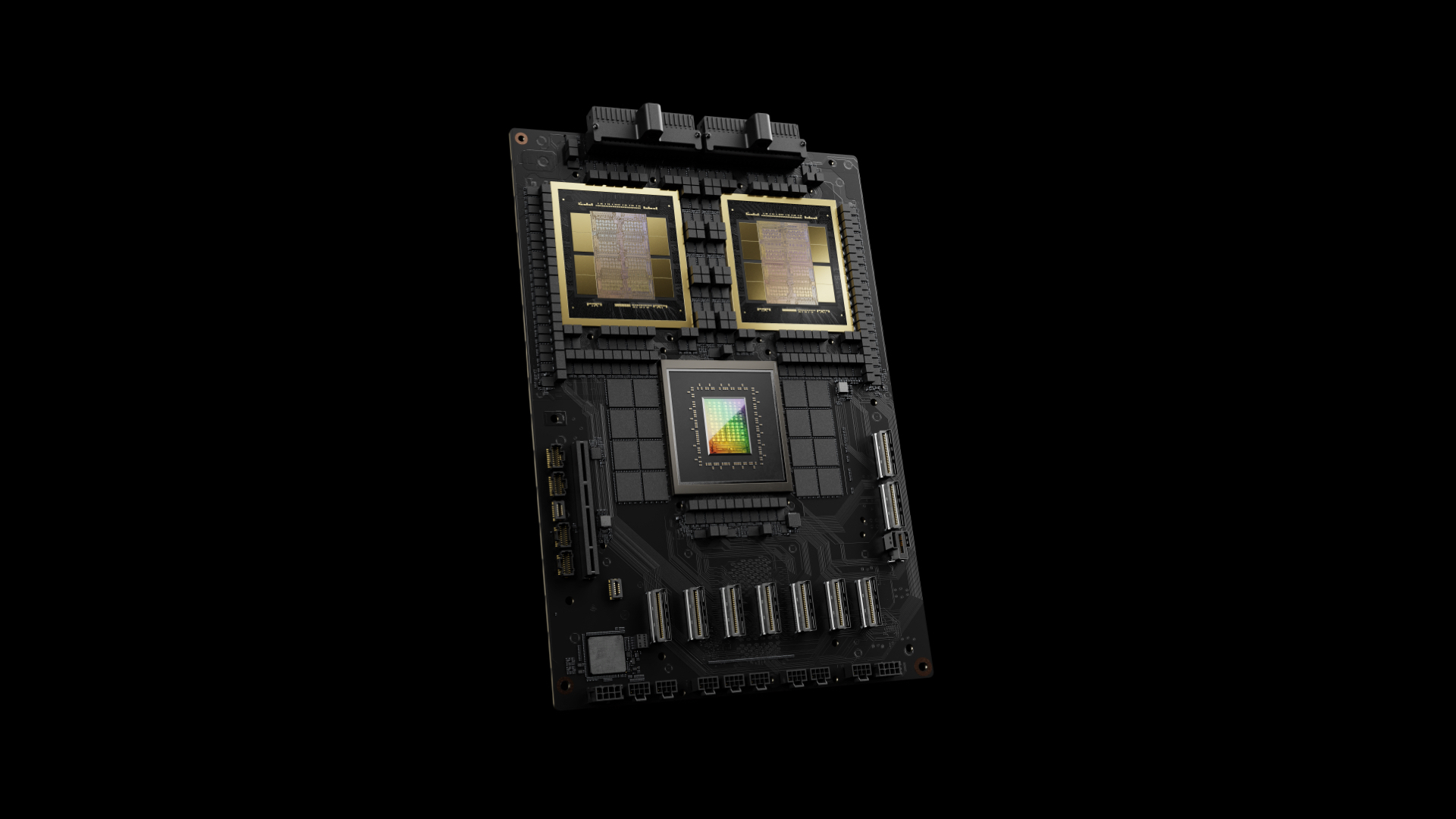
At GTC in San Jose on March 18, 2025, Nvidia announced Blackwell Ultra, the next step of the Blackwell platform. The GB300 NVL72 rack connects 72 Blackwell Ultra GPUs and 36 Grace CPUs, and Nvidia says it delivers 1.5 times the AI performance of the GB200 NVL72. The HGX B300 NVL16 server, Nvidia says, offers 11 times faster LLM inference, 7 times more compute and 4 times larger memory than the Hopper generation. Per chip, TechCrunch reported, memory rises to 288GB, from 192GB in Blackwell.
"AI has made a giant leap — reasoning and agentic AI demand orders of magnitude more computing performance," Huang said. Nvidia also claimed the GB300 NVL72 raises Blackwell's revenue opportunity for AI factories by 50 times compared with Hopper. That is a business estimate, not a speed test.
Nvidia expects Blackwell Ultra products from partners starting in the second half of 2025. At Computex in Taipei on May 19, Huang showed a GB300 system, which PCMag reported is slated to launch in the third quarter. He also introduced NVLink Fusion, which opens Nvidia's NVLink interconnect to partners' own CPUs and custom chips.
At GTC in March, Huang also set out the roadmap after that: Vera Rubin, pairing a Rubin GPU with a new Nvidia CPU called Vera, in the second half of 2026; Rubin Ultra in the second half of 2027; and an architecture called Feynman in 2028.

How to read Nvidia's performance claims
- Check the baseline. "Nearly double" for the H200 is against the H100 on one Llama 2 inference test. The GB300 NVL72's 1.5 times is against the previous Blackwell rack. The 30 times and 11 times figures are against Hopper. Each number answers a different question.
- Memory is doing much of the work. The H200 kept the H100's Hopper design and gained from larger, faster memory. Blackwell Ultra also raises memory per chip, to 288GB. For running large models, memory often sets the pace.
- Announcement is not availability. The H200 was announced in November 2023 and reached the cloud in mid-2024. Blackwell Ultra was announced in March 2025 and is due in the second half of the year. Buyers plan around ship dates, not keynotes.
Update: what happened next (October 2026)
This article was first published on May 28, 2025. Here is how the story has developed since then:
- August 2025: Nvidia's second-quarter results quoted Huang: "production of Blackwell Ultra is ramping at full speed, and demand is extraordinary." The company reported no H20 sales to China-based customers in the quarter.
- December 2025: President Trump said the U.S. would allow Nvidia to ship H200 chips to approved customers in China, with 25% to be paid to the United States. Blackwell and the coming Rubin chips were excluded.
- January 2026: At CES on January 5, Nvidia launched the Rubin platform, six new chips including the Rubin GPU and Vera CPU, with partner products due in the second half of 2026. Nvidia claimed up to 10 times lower inference cost per token than Blackwell. The same month, the administration formally approved H200 sales to China, with conditions.
- March 2026: At GTC on March 16, Nvidia said the Vera Rubin platform had seven chips in full production, adding a new Groq 3 LPU for inference. Huang named Feynman, with a new CPU called Rosa, as the next architecture, and said he saw at least $1 trillion in revenue from 2025 through 2027.
- April to August 2026: H200 sales to China stalled. On April 22, Commerce Secretary Howard Lutnick told a Senate hearing that Beijing had not let Chinese companies buy them: "We have not sold them chips as of yet." In July, a Commerce official said only "a very small quantity of chips" had shipped. In August, the Financial Times reported that ByteDance and Tencent had each received about 10,000 H200s.
- August 2026: Nvidia reported quarterly revenue of $96.2 billion and said Vera Rubin was ramping into full production, with racks running at CoreWeave, Google Cloud, Microsoft Azure, Oracle Cloud Infrastructure and Nebius. Its outlook still assumed no data center compute revenue from China.
By late 2026, the H200 was two generations behind Nvidia's newest systems, and its biggest story was no longer speed but export policy.
Sources
- NVIDIA: NVIDIA Supercharges Hopper, introducing the H200 (November 13, 2023)
- NVIDIA: H200 GPU product page
- NVIDIA: GH200 Grace Hopper Superchip with HBM3e (August 8, 2023)
- NVIDIA: Second-quarter fiscal 2025 results, H200 on CoreWeave (August 28, 2024)
- NVIDIA: Blackwell platform arrives (March 18, 2024)
- NVIDIA: First-quarter fiscal 2026 results (May 28, 2025)
- NVIDIA: Blackwell Ultra AI factory platform (March 18, 2025)
- TechCrunch: Blackwell Ultra, Vera Rubin and Feynman are Nvidia's next GPUs (March 18, 2025)
- NVIDIA: NVLink Fusion (May 18, 2025)
- PCMag via Yahoo Tech: Everything Nvidia revealed at its Computex 2025 keynote (May 19, 2025)
- NVIDIA: Second-quarter fiscal 2026 results (August 27, 2025)
- The Register: Trump says Nvidia can sell H200s to China (December 9, 2025)
- NVIDIA: Rubin platform launch at CES (January 5, 2026)
- NVIDIA: Vera Rubin opens agentic AI frontier (March 16, 2026)
- NVIDIA Blog: GTC 2026 live updates (March 19, 2026)
- The Standard, from Reuters: Nvidia has not yet sold H200 chips to China, Lutnick says (April 23, 2026)
- CNBC: "Very few" Nvidia H200 chips shipped to China (July 14, 2026)
- Tom's Hardware, citing the Financial Times: First H200 shipments reach China (August 19, 2026)
- NVIDIA: Second-quarter fiscal 2027 results (August 26, 2026)
Subscribe to Weekly Insights
Get weekly insights on AI, SEO, and Growth Marketing delivered to your inbox. No spam, just the good stuff.
Prefer not to subscribe? Feel free to follow me on LinkedIn for the same insights and to connect